Colors can be helpful metaphors for describing all manner of emotions and circumstances. If we say we’re SEEING RED the listener knows we’re angry. When we share that we’re FEELING BLUE those around us know we’re sad. A skilled gardener is understood to have a GREEN THUMB, while someone who is faint of heart is said to have a YELLOW STREAK. We describe a uncomplicated situation as BLACK AND WHITE, or recount a friend’s COLORFUL language during a passionate debate.
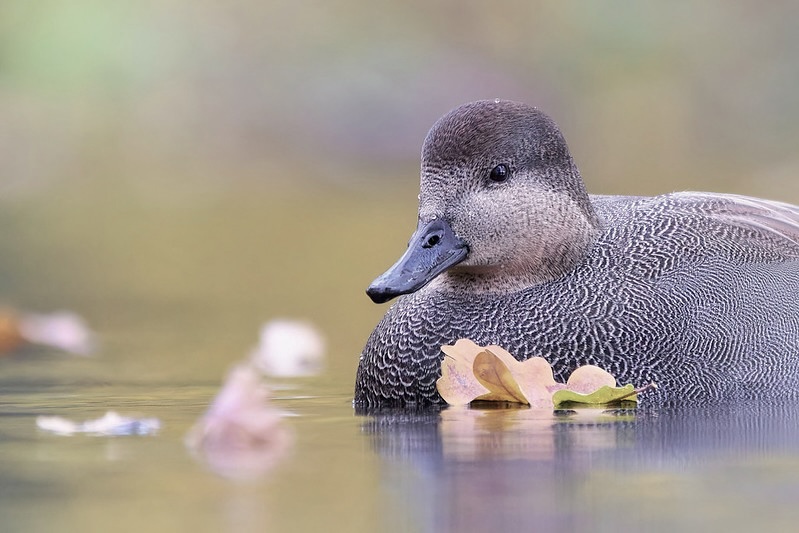
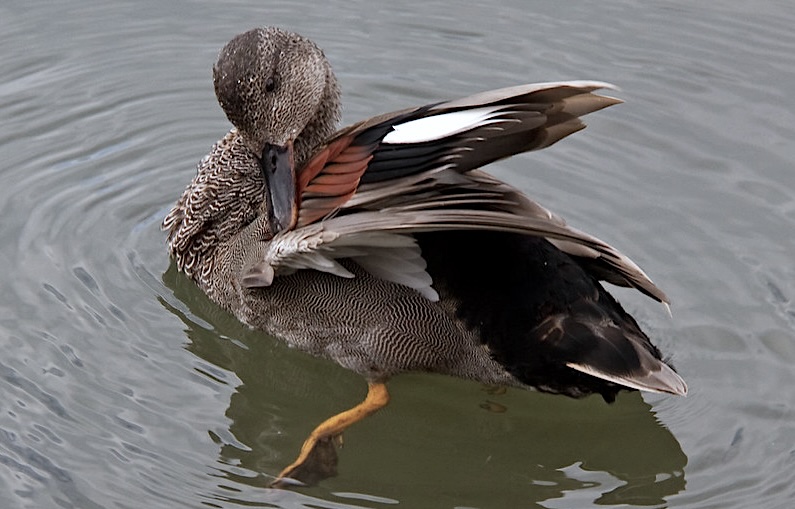
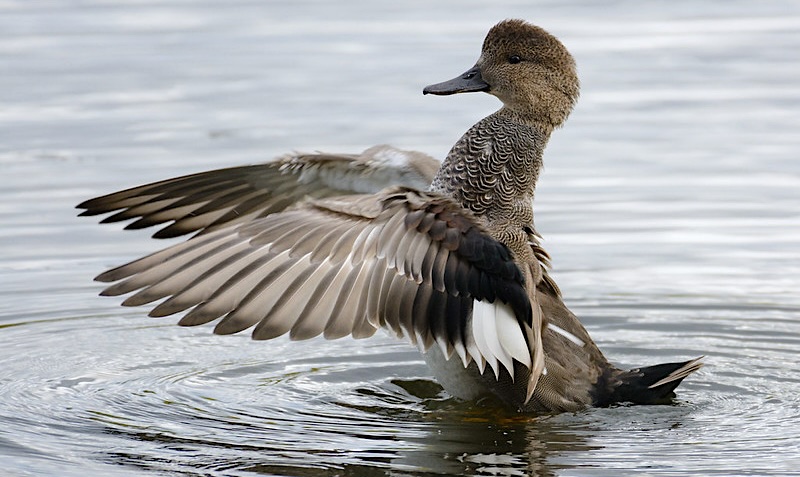
But if we’re talking about the intricately patterned plumage of male Gadwalls (Mareca strepera), dabbling ducks found in North America, Europe, and the Palearctic, the phrase SHADES OF GREY is a literal, not allegorical, descriptor. This is especially true during the breeding season, when males are wearing a GQ-worthy patterned grey suit accentuated with handsome chestnut wings edged in white and a black tail.
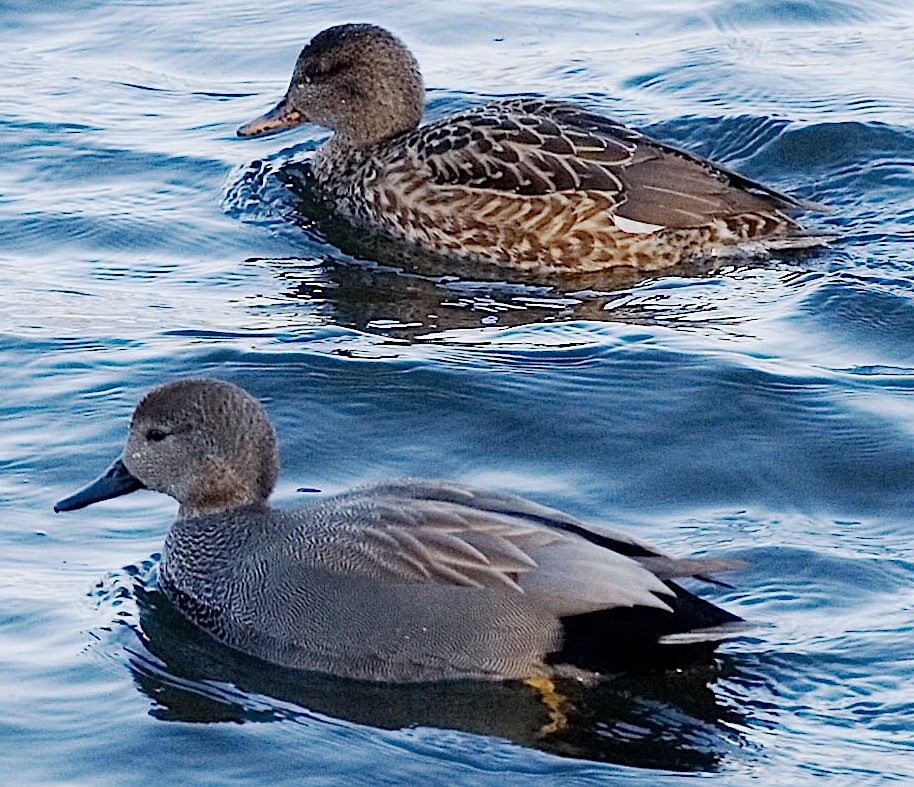
True to form in the bird world, female Gadwall plumage features demure brown and buff tones, similar to that of a female mallard but without the mallard’s signature flash of amethyst on the wing.
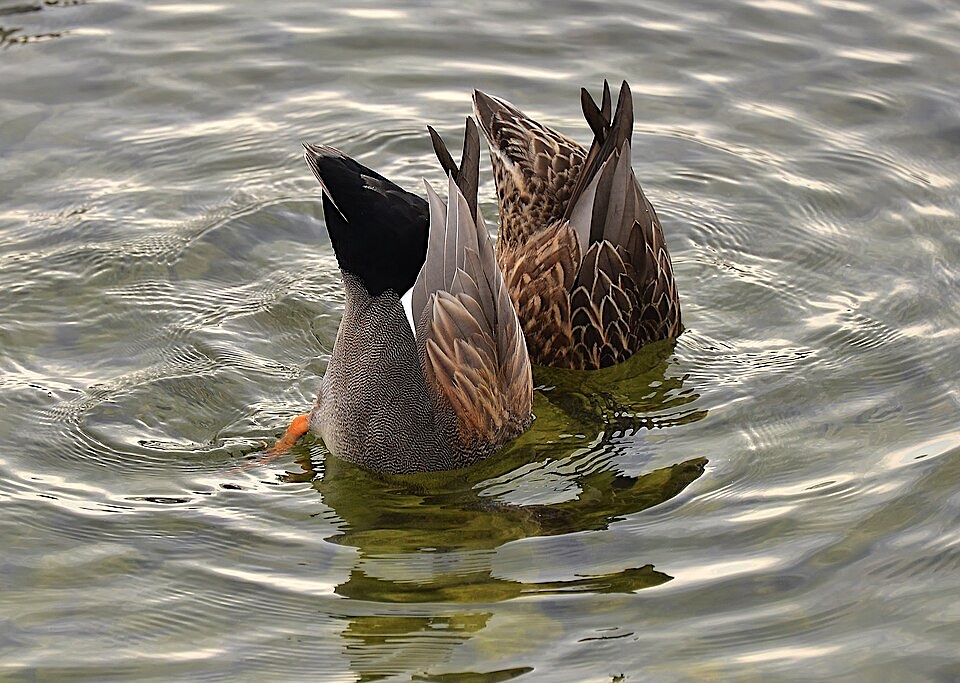
Chromatically muted though they may be, Gadwalls aren’t as conventional as they first appear. For one thing, they’ve got a pirate streak that’s fitting for a bird who lives the life aquatic, but surprisingly uncommon among their waterfowl kin. Gadwells usually feed by tipping forward to graze on the leaves, stems, roots, and seeds of submerged plants, including grasses, pondweed, rushes, and sedges. They’ll add a bit of protein by consuming beetles, midges, snails, and other invertebrates, especially during breeding season. But from time to time they’ll also nick a nibble from coots, gallinules, and other ducks as they surface.
Come late fall and early winter, either during migration or when everyone is hanging out at what passes for a Gadwall cruising ground, adults start sizing up the field of potential mates. Male Gadwall courtship moves are pretty beige, but all the guys use the same flirtation palette, and that’s what the gals like and expect, so there’s no benefit to be gained from improvising.
Here’s how it goes… if a female catches a fella’s eye he’ll try to catch hers by spiking the feathers on his noggin, hipster-fashion. Once he knows she’s looking he’ll rise up out of the water with wings and tail extended — very impressive. Next, he’ll dip his bill into the water and toss arcs and droplets of liquid into the air while loudly whistling.
If that convinces her this suitor is Mr. Right, the couple will face one another, raise and lower their heads several times, and repeatedly tuck their bills beneath their wings as if preening — this is the Gadwall equivalent of consent. As their pair bond strengthens they’ll start making plans to raise a family.
Sounds pretty suburban, I know, but there’s an important caveat… Gadwalls are only seasonally monogamous.
Hey, I know it’s not 50 Shades of Grey, but 15 shades is still pretty impressive, don’t you agree?
Life is better with Next-Life is better with Next-Door Nature—click the “subscribe” link in the lower left-hand corner of the footer and receive notifications of new posts! Have a question about wildlife and other next-door nature? Send me an email and the answer may turn up as a future blog post.
© 2026 Next-Door Nature. No reprints without written permission from the author (I’d love for you to share my work--just ask first). Thanks to these photographers for making their work available through a Creative Commons license (from top to bottom): Andrey Gulivanov; Tony Hisgett; Andrew Dunn; Mykola Swarnyk; and Claudine Lamothe.


Wonderful post about one of my favorite ducks!