How do you assign a value to nature, or to a specific component of an ecosystem?
Humans have developed various methods for determining worth, some more satisfying than others (because what qualifies as gratifying depends on one’s own priorities and ethics). For example, it’s possible to assess the market value of a stand of timber, or calculate the dividends humans receive from ecosystem services like the flood mitigation provided by wetlands, or we can document the mental health benefits of watching wind transform meadow grasses into a kind of terrestrial sea, or note the contribution local songbirds make to our quality of life when we hear their Ode to Joy dawn chorus.
But how would you go about appraising the unintentional contributions to science made by the small, easy-to-overlook Peppered Moth (Biston betularia)?
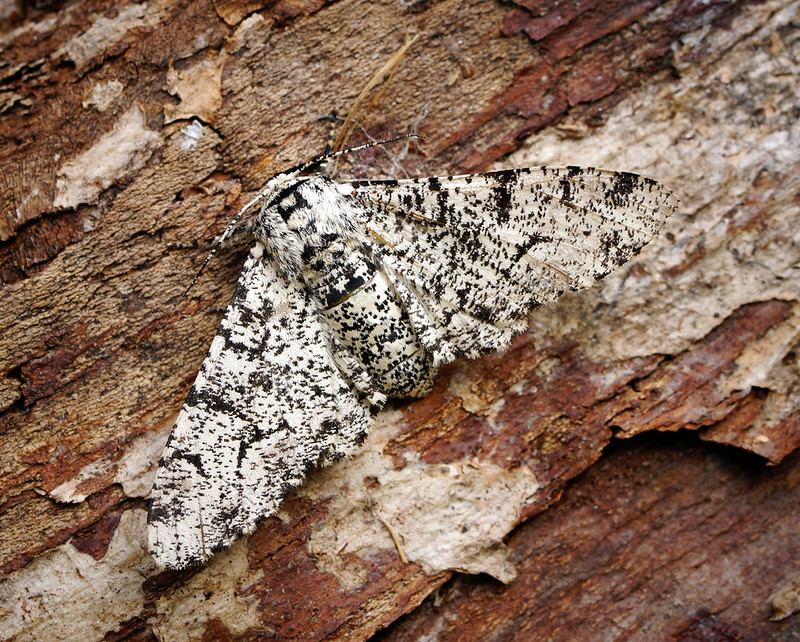
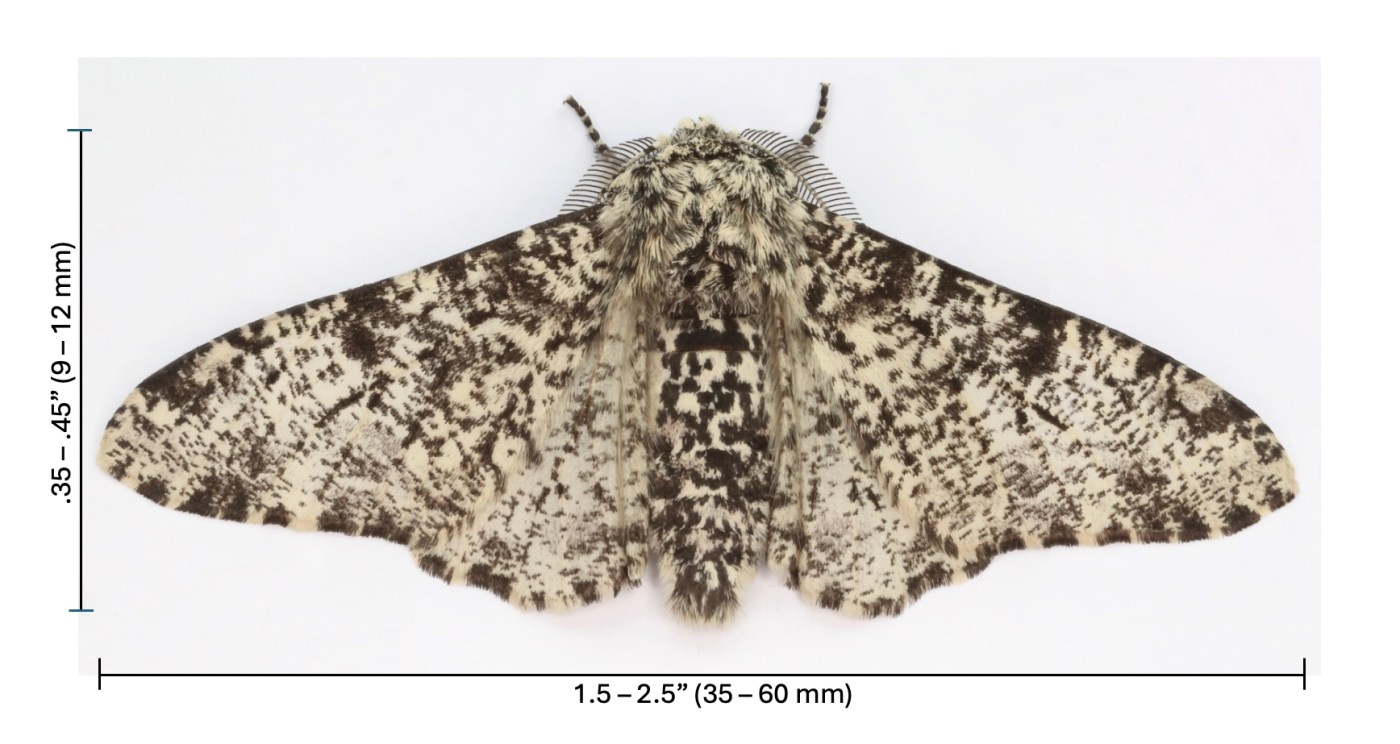
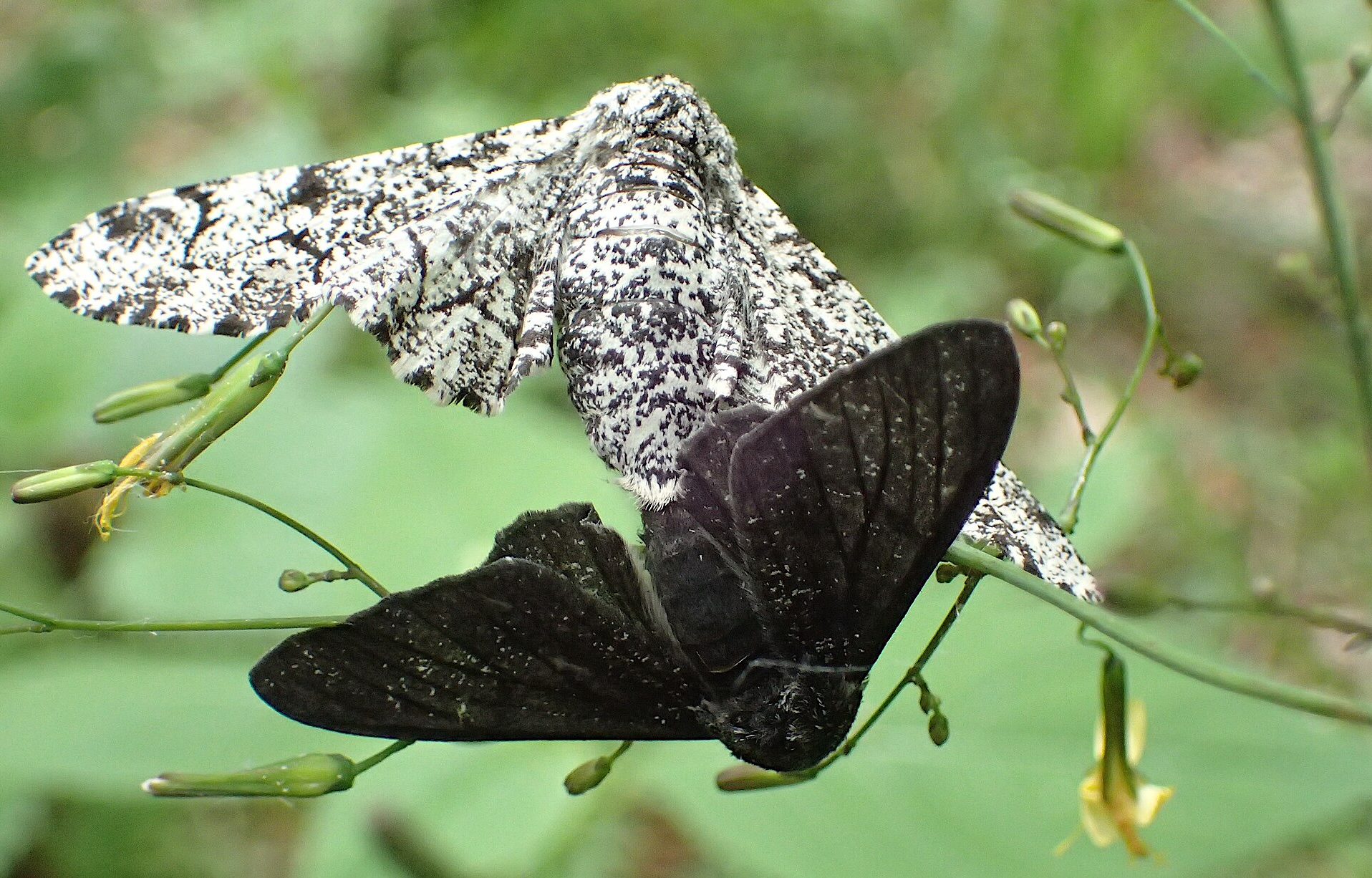
Peppered Moths are a nocturnal species found on three continents in the Northern Hemisphere: Asia, Europe, and North America. As moths go, they’re rather stocky, with a relatively wide thorax and abdomen . At rest, the body and wings form a kind of chevron, and their common name is a description of the species’ most familiar coloration — white or ivory wings “peppered” with black spotting that blends in with the tree bark and lichens on their favorite daytime resting sites. This cryptic patterning helps the moths escape detection by birds and other predators.
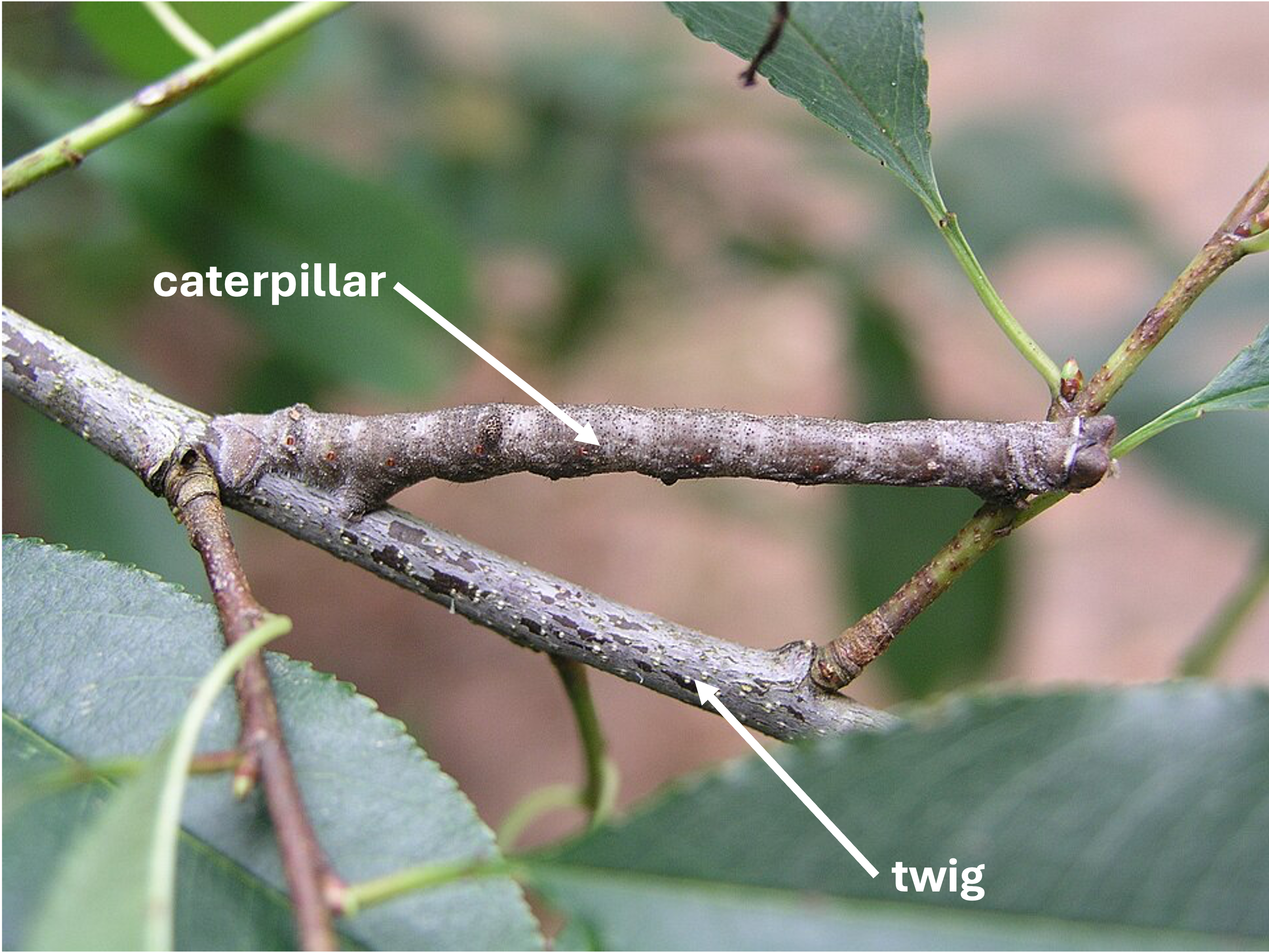
For this species, though, hiding in plain sight begins long before metamorphosis — Peppered Moth caterpillars are exceptionally skilled at twig mimicry. Research suggests these caterpillars can sense the color of a branch and adjust their skin tones to matching shades of green and brown. This knack for conforming to the environment is similar to the behavior of squids and other cephalopods, chameleons, and certain fish.
It was during the First Industrial Revolution that this member of the Geometridae family (aka geometer moths) made an outsized contribution to biologists’ understanding of natural selection.
Starting in the 1760s, human societies and economies began to shift their focus from agriculture to manufacturing. The transition began in Great Britain, spread to continental Europe, then jumped the Atlantic to land in the United States. Powered by coal, the textile industry lead this conversion from production of goods by hand to adoption of large-scale production by machines. Other industries followed suit, including metallurgy and mining, chemicals, concrete, glass, paper, and eventually even agriculture.
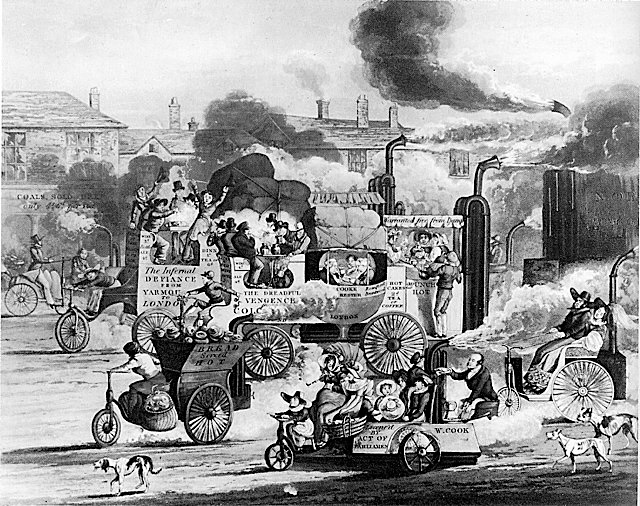
In Europe, the engines of industry coughed smoke across cities like Manchester, Birmingham, and Sheffield, the three largest centers of manufacturing in England, as well as Berlin, Paris, and Milan. Air pollution became omnipresent and very visible, and coal soot gradually darkened buildings and trees. The effect on the residents of these cities was considerable and, in the case of Peppered Moths, it was also quite conspicuous.
You see, while there had always been some color variation among Peppered Moths, prior to the Industrial Age the overwhelming majority were rather pale. This was not by accident— as mentioned above, their coloring matched that of favorite resting substrates. As factory furnaces fired up and churned out manufactured goods, the pale colors that had been such an asset for these moths became a liability. When the light-colored individuals settled on the coal-darkened trunks and limbs of urban chestnut, oak, and sycamore trees they stood out like a proverbial sore thumb, and became the avian equivalent of fast food. As a result, fewer survived to reproduce and pass their coloration on to offspring.
Prior to the advent of the Industrial Age, however, dark-colored Peppered Moths were quite rare. But the trait that had been a disadvantage before the manufacturing boom— too much pepper— was now an effective camouflage. The coal-colored moths thrived, and more importantly survived long enough to pass this pigmentation on to their progeny, Over a pretty short period of time dark outnumbered light.
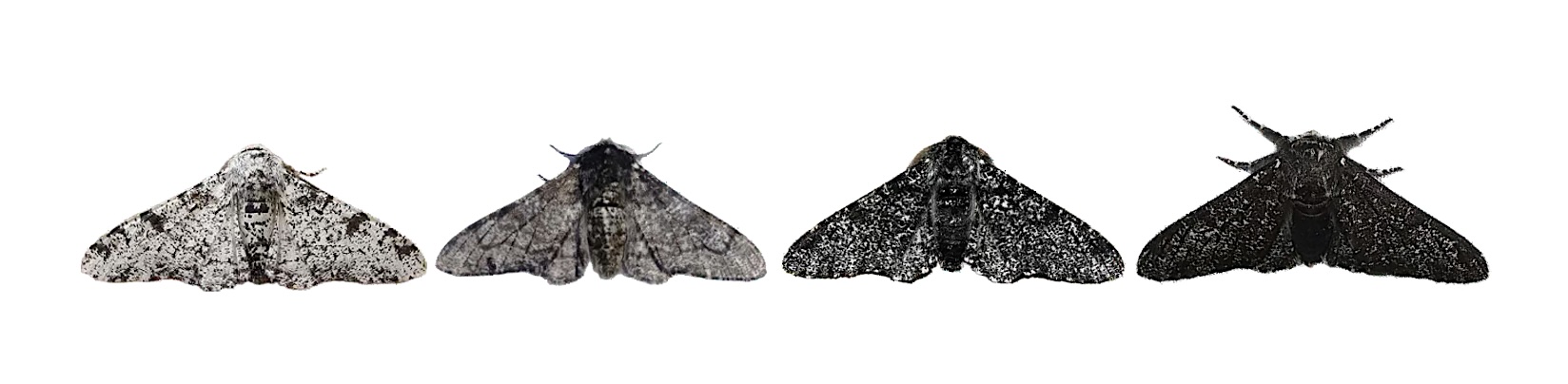
This transformation from light to dark is a textbook example of changes in the environment driving the evolution of a species. I mean that quite literally— open any biology textbook that addresses evolution and you’ll likely find the Peppered Moth. Not only did these small creatures provide observable, in-the-moment evidence for how natural selection works, they also changed how evolutionary biologists thought about the speed at which a significant change can occur within a population. By 1896, dark moths accounted for 96% of individuals collected by field biologists in urban areas.
English lawmakers began to address public concerns about the impacts of factories on human respiratory health as early as 1845 by placing some regulatory limitations on smokestack emissions. But it wasn’t until the mid-20th century— 100 years later, and in response to several incidents in which air pollution caused the death or serious illness of hundreds, and in one case thousands, of their citizens— that both Great Britain and the U.S. got serious about air quality legislation.
And, wouldn’t you know it, cleaner air resulted in reduced respiratory illness, cleaner cities (including urban trees), and the return of light-colored Peppered Moths.
It turns out that, at least in some cases, humans learn from their mistakes much more slowly than natural selection… even when the consequences of their actions can be measured by a moth.
Life is better with Next-Life is better with Next-Door Nature—click the “subscribe” link in the lower left-hand corner of the footer and receive notifications of new posts! Have a question about wildlife and other next-door nature? Send me an email and the answer may turn up as a future blog post.
© 2026 Next-Door Nature — no reprints without written permission from the author (I’d love for you to share my work but please ask). Thanks to the following photographers for making their work available through a Creative Commons license: Janet Graham, Ben Sale, Evanherk, H.T. Alken, gailhampshire, Cyndy Sims Parr, Ben Sale, Ben Sale, and Siga.


.jpg)


_Peppered_Moth_(Biston_betularia)_f.insularia_(3660480813).jpg)


Leave a Reply