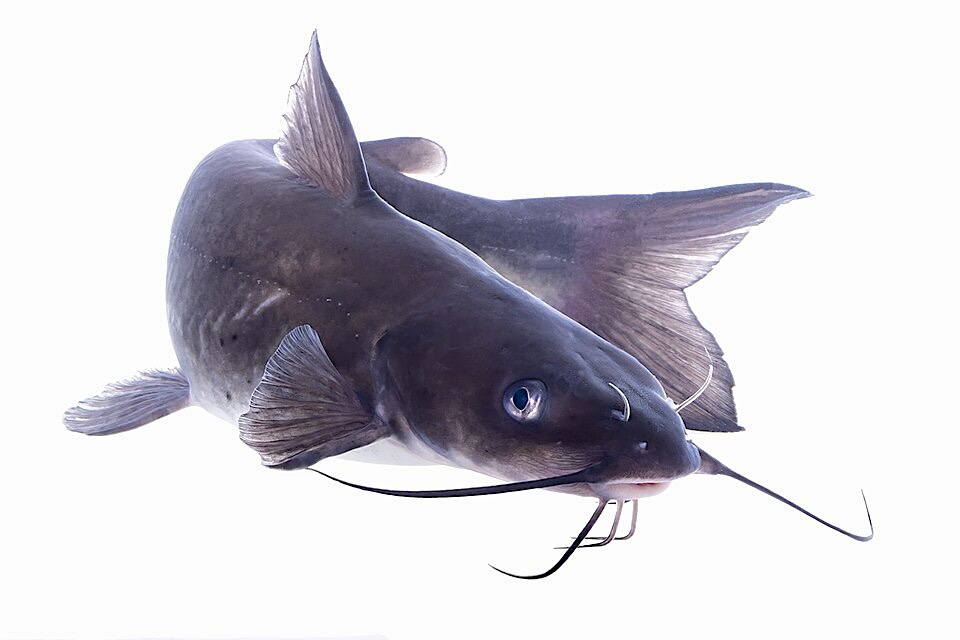
I’ll bet you’d recognize this fella even if you’ve never met face-to-face. He a night owl, a lounge lizard straight out of Central Casting, complete with rakish Salvador Dali mustache and goatee. He’s been hanging around the dimly lit watering holes of cities, suburbs, and sylvan landscapes all across North America for as long as anyone can remember… since, like, at least the mid-Miocene.
If that characterization sounds a little fishy, you’ve hit the right note. Our hipster hero isn’t a literal lizard or owl, but he is a cool cat. A channel catfish, to be specific. He’s a smooth operator, his back and sides covered in sleek, scaleless skin that varies from khaki green to gunmetal gray, and his belly is as silvery-white as new Pearl drum kit.
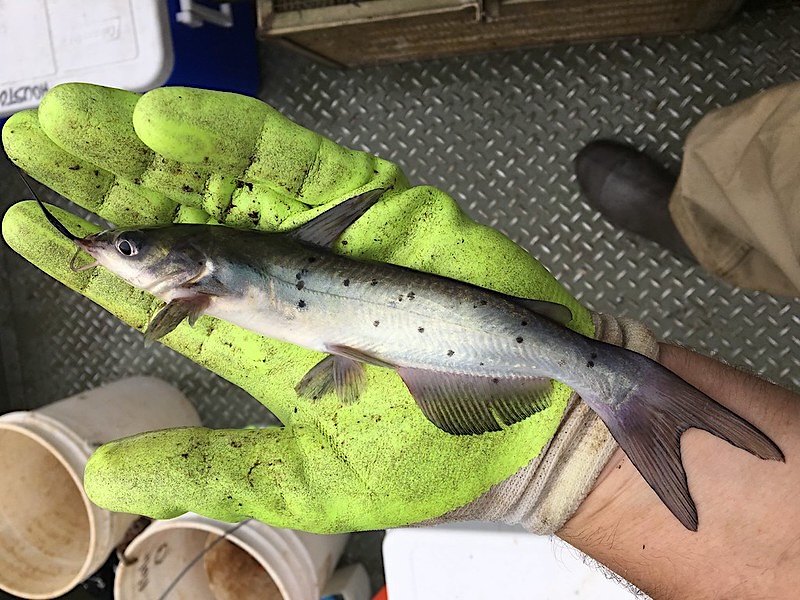
His given name is Ictalurus punctatus, Latin for “fish cat with spots.” That was an accurate enough description in his youth, I suppose, before those prominent spots dimmed with age. More often, he goes by a mash-up of nicknames, including: willow cat, river cat, sand cat, fork-tailed cat, speckled cat, and my personal favorite, the swimming tongue.
That last moniker alludes to the fact that his taste buds are dispersed over the entire surface of his body. Working in concert with his similarly well-developed ability to smell and hear, he has the chops to improvise and survive in the turbid venues where bottom-dwellers congregate.
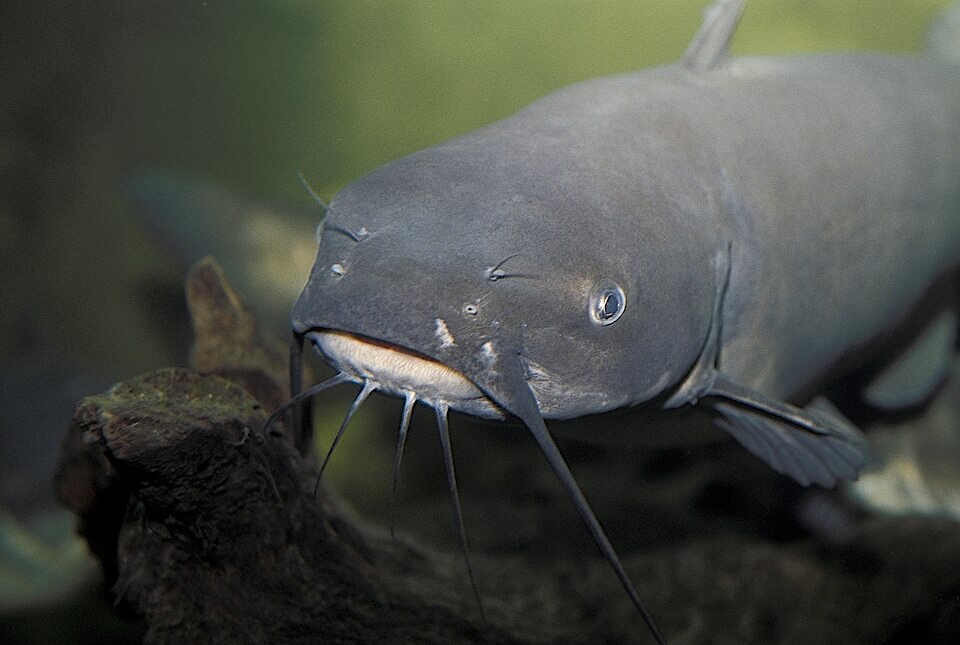
But don’t make the mistake of thinking this cat is only into tasty licks. He’s also no slouch when it comes to creative percussion.
Unlike other members of the catfish crew, channel cats don’t have the muscles needed to turn a swim bladder into a drum. But they do have a unique backbone that features an extended fin ray on each side. When they flex their pecs, that spine strums across the pectoral girdle, adding a pulsing grind to the mix. As an encore, this peculiar anatomical feature helps expand fin flexibility and range of motion, so even though channel cats don’t have fingers, they can snap their front fins and keep time with a comparable *CLICK!* Believe me, this aquatic beast knows how to announce his presence with sonic authority to underwater rivals and predators alike, and they surely do pick up on what he’s laying down.
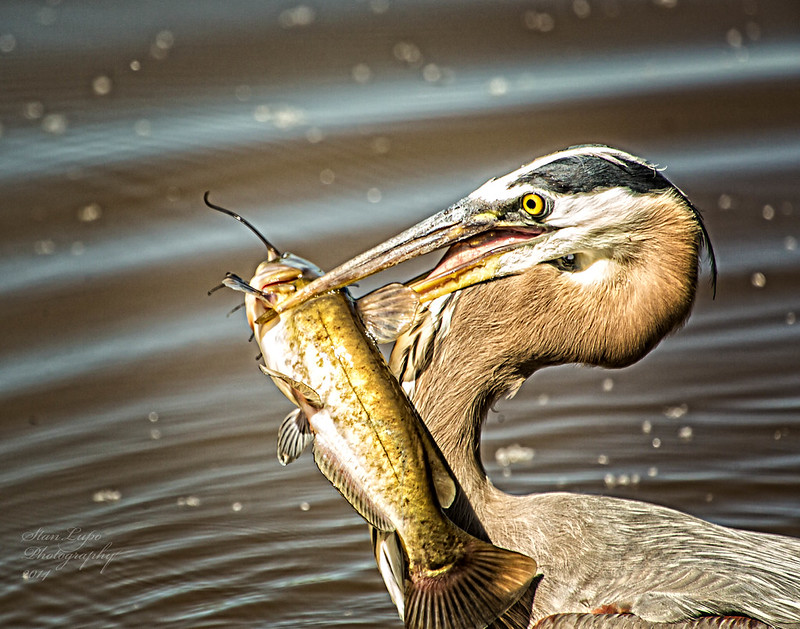
Surface-dwelling predators like eagles, osprey, herons, kingfishers, otters, and raccoons? Not so much, and not impressed.
Ironically, that auditory intimidation also doesn’t work on the omnipresent population of music-loving, catfish-consuming primates known as Homo sapiens.

I guess it’s true that cool will only get a cat so far in this life.
Life is better with Next-Life is better with Next-Door Nature—click the “subscribe” link in the lower left-hand corner of the footer and receive notifications of new posts! Have a question about wildlife and other next-door nature? Send me an email and the answer may turn up as a future blog post.
© 2026 Next-Door Nature — no reprints without written permission from the author (I’d love for you to share my work but please ask). Thanks to the following photographers for making their work available through a Creative Commons or public domain license: USFWS Mountain-Prairie; Department of Environment, Great Lakes, and Energy; Missouri State Archives; Stan Lupo; and Rene Jakobson.
 Next-Door Nature


Leave a comment