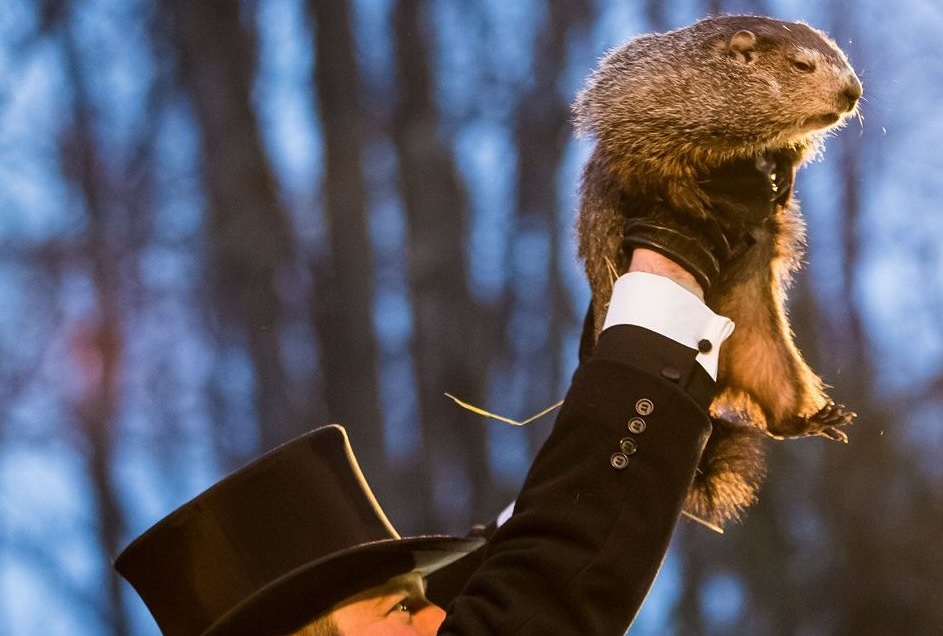
“I don’t want to get up! It’s too early! It’s too bright! It’s too cold! Let me go back to sleep!!”
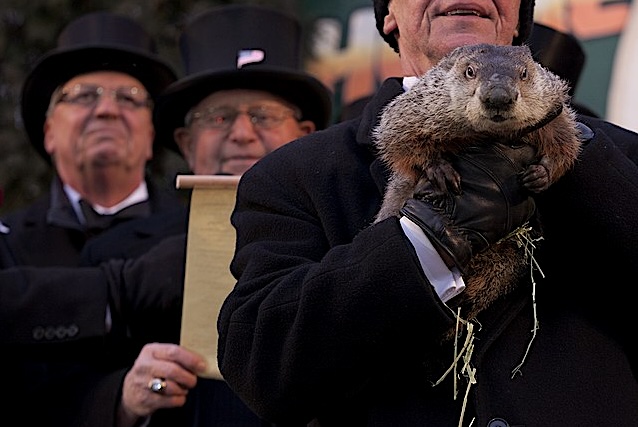
That’s what I imagine Punxsutawney Phil grumbling when an official pair of gloved hands reaches into the rodent’s enclosure on February 2nd— the groundhog equivalent of about 4 am— to drag him out of dreamland and into the cold light of day to look for his shadow.
Imagine a scowling teen skulking out the door on a winter school day, eyes barely open, lip curled into a snarl… yep, you’ve got the picture.
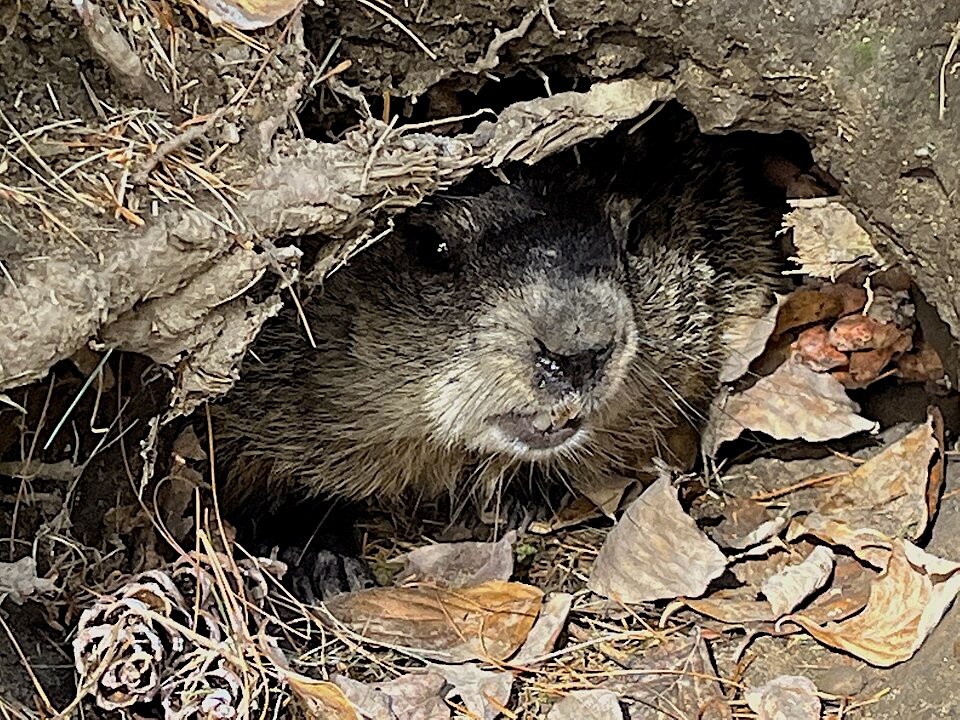
Four in the morning is an apt correlate in this case. Groundhogs (Marmota monax) are true hibernators. Come late October or early November they become subterranean homebodies, and they’ll stay underground for about 4 months, until late February or early March. The exact dates vary depending on latitude, as well as whether winter comes early or late and is mild or fierce that year.
Groundhogs (aka whistle pig, land beaver, red monk, woodchuck) belong to the “marmot tribe,” a group of ground squirrels that includes chipmunks, prairie dogs, and marmots. They can be found throughout most of the Eastern half of the U.S., south to nearly the Florida panhandle, west into Kansas and Nebraska, north into Canada and even Alaska.
Groundhogs are true hibernators, genuinely exceptional slackers, at least during that part of the year when Earth’s northern hemisphere is tilted away from the Sun. Their body temperature will drop from an average of 99°F (37°C) during active times of year to as low as 35°F (2°C). Their heart rate drops to between 4 and 10 beats per minute as their breath slows to once every 5 or 6 minutes. Technically, this is not sleep, it’s torpor. Every few weeks the animal will wake, its body temperature will return to near normal, and this dormancy-arousal pattern will continue until it’s warm and green enough outside to safely leave home.
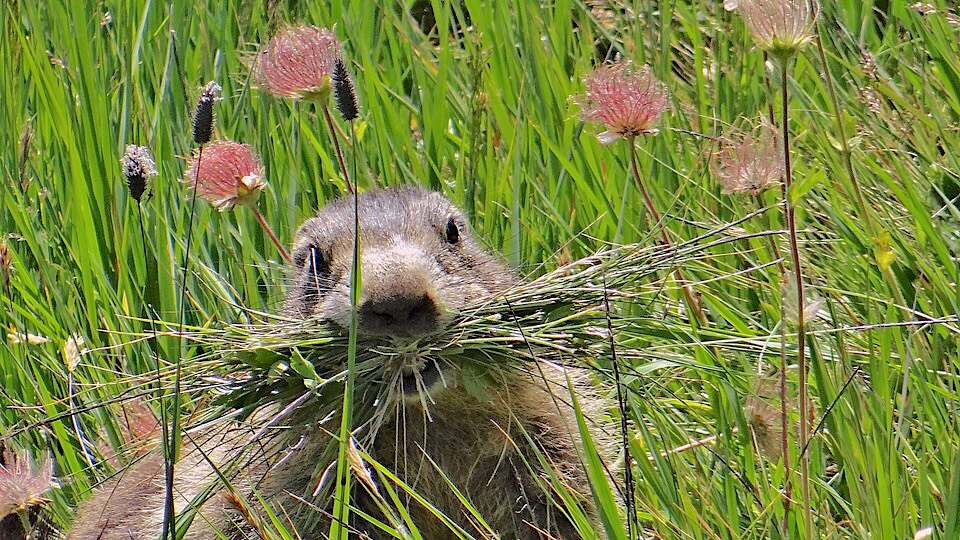
Under normal circumstances, once they turn in for the winter groundhogs don’t leave home until Spring is on the way. And who can blame them? Their self-constructed burrows are tidy, comparatively cozy, multi-chamber retreats 2-3 ft (.6-.9 m) below the surface, with long tunnels and multiple entrance/exit points to provide escape options should a predator come to call. Like most modern homes, each room in the burrow has a specific purposed. There are rooms for sleeping and for hibernating, lined with dried grasses and leaves for added warmth and comfort. There are mating chambers, nurseries, and bathrooms.
You read that right… groundhog burrows include chambers that are used during hibernation specifically and exclusively as powder rooms. There’s no flush toilet, of course, so when the chamber is full the resident will seal off that chamber with the soil excavated to create a new bathroom chamber.
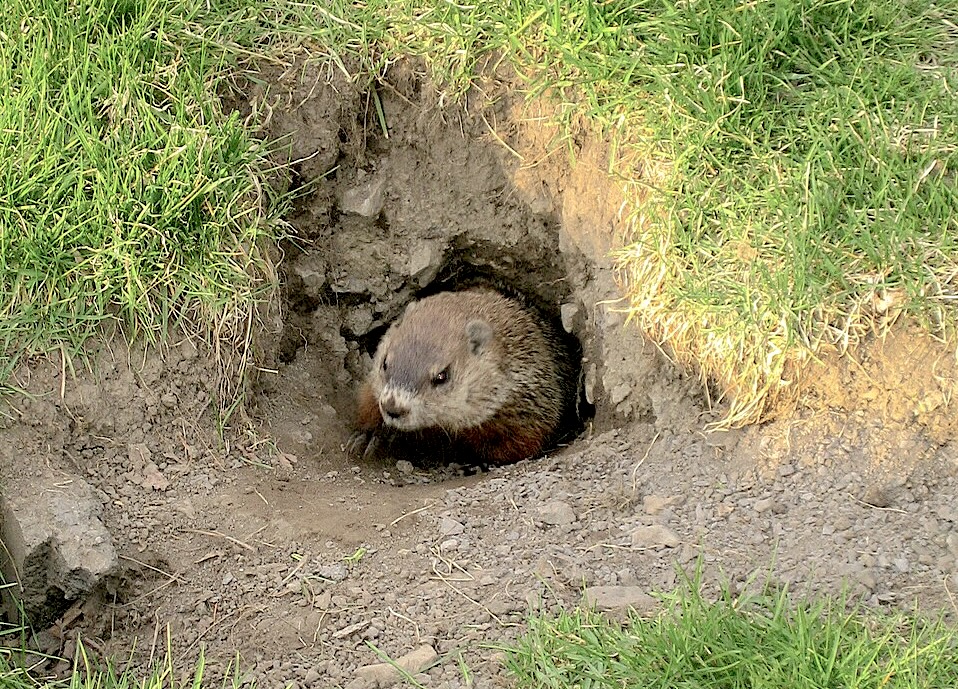
There’s an element of altruism at play here, however unintentional. Groundhogs are a keystone species for lowland ecosystems— the small woodlots, forests, fields, pastures, and hedgerows where these marmots live. As habitat engineers, their burrow construction plays a decisive roll in maintaining healthy soils, as well as critical resources such as food, water, and shelter. And groundhog burrows, whether abandoned or still in use by the builders, are home to other creatures, too, especially during the winter months, including chipmunks, foxes, otters, rabbits, raccoons, and snakes.
With so many guests and activities centered around the burrow, you might understandably assume that groundhogs are as extroverted and social as their prairie dog kin. While it’s true that groundhogs have strong familial ties to their offspring, form complex social networks, communicate with one another (using low barks, whistles, and sounds made by grinding teeth), and working cooperatively, it’s also true that researchers consider groundhogs to be one of the least social of the marmots. They’re known to not just give each other the cold shoulder but to battle for territory and social dominance.
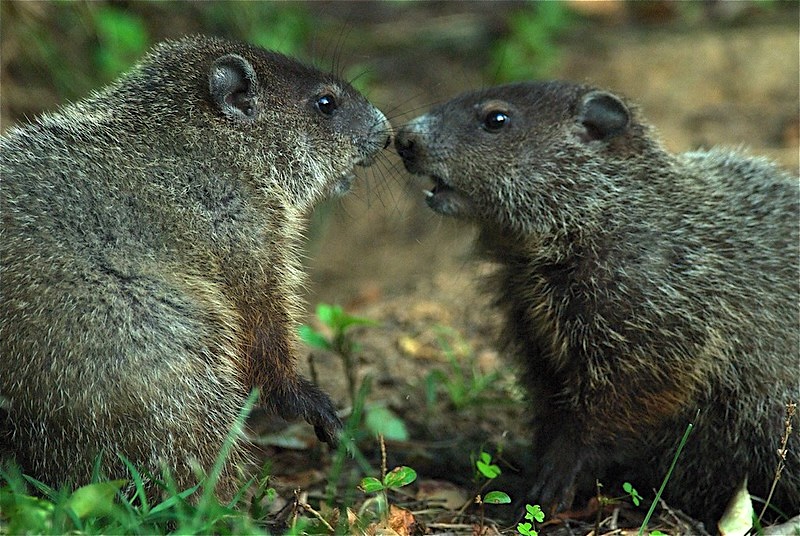
I guess spending a quarter of each year underground provides a welcome respite from both inclement weather and one’s own kind. No wonder Punxsutawney Phil never seems thrilled to come outside and say hello to both his shadow and the crowds of humans who have gathered for the event. Based on pics and vids that appear on local news broadcasts and social media sites like clockwork ever February 2nd, he’s a polite, well-mannered but unenthusiastic civil servant who would clearly have preferred to sleep in.
And really, why would any groundhog want to leave their cushy, custom-built crib for the harsh light of day above? There are two compelling reasons, actually: hunger, and sex. By late February or early March, hibernating groundhogs have lost at least half of their body weight and their portable pantry of fat is looking bare. A growling tummy has motivated more than one slacker to get out of bed or off the couch to hunt and gather. The same can be said for the hormonal hunger of desire, which in the case of groundhogs awakens in early spring, but doesn’t last nearly as long as hibernation. There’s just a week or two of hooking up— groundhogs don’t form long-term, stable pair bonds— and then it’s time to get busy with the important work of eating full-time in preparation for next year’s big sleep.
I’m certain the citizens of Punxsutawney, PA didn’t set Phil up on a blind date for later that evening, but I hope they took him out for a celebratory dinner after the festivities were finished, at the very least.
If not, maybe that’s why this prognosticating marmot just wants to go back to sleep.
Life is better with Next-Life is better with Next-Door Nature—click the “subscribe” link in the lower left-hand corner of the footer and receive notifications of new posts! Have a question about wildlife and other next-door nature? Send me an email and the answer may turn up as a future blog post.
© 2026 Next-Door Nature — no reprints without written permission from the author (I’d love for you to share my work but please ask). Thanks to the following photographers for making their work available through a Creative Commons license: Chris Flook, EleetCanoe, Ibex73, Jiel Beaumadier, TCDavis, and Anthony Quintano.


.jpg)

.jpg)


Leave a comment